

STUDIO@MARTINFRENCH.COM | 503.926.2809
@MARTINFRENCHSTUDIO
REPRESENTED BY ILLUSTRATION ZONE
USA 347-284-6370 | EUROPE +31613949221
HELLO@ILLUSTRATIONZONE.COM
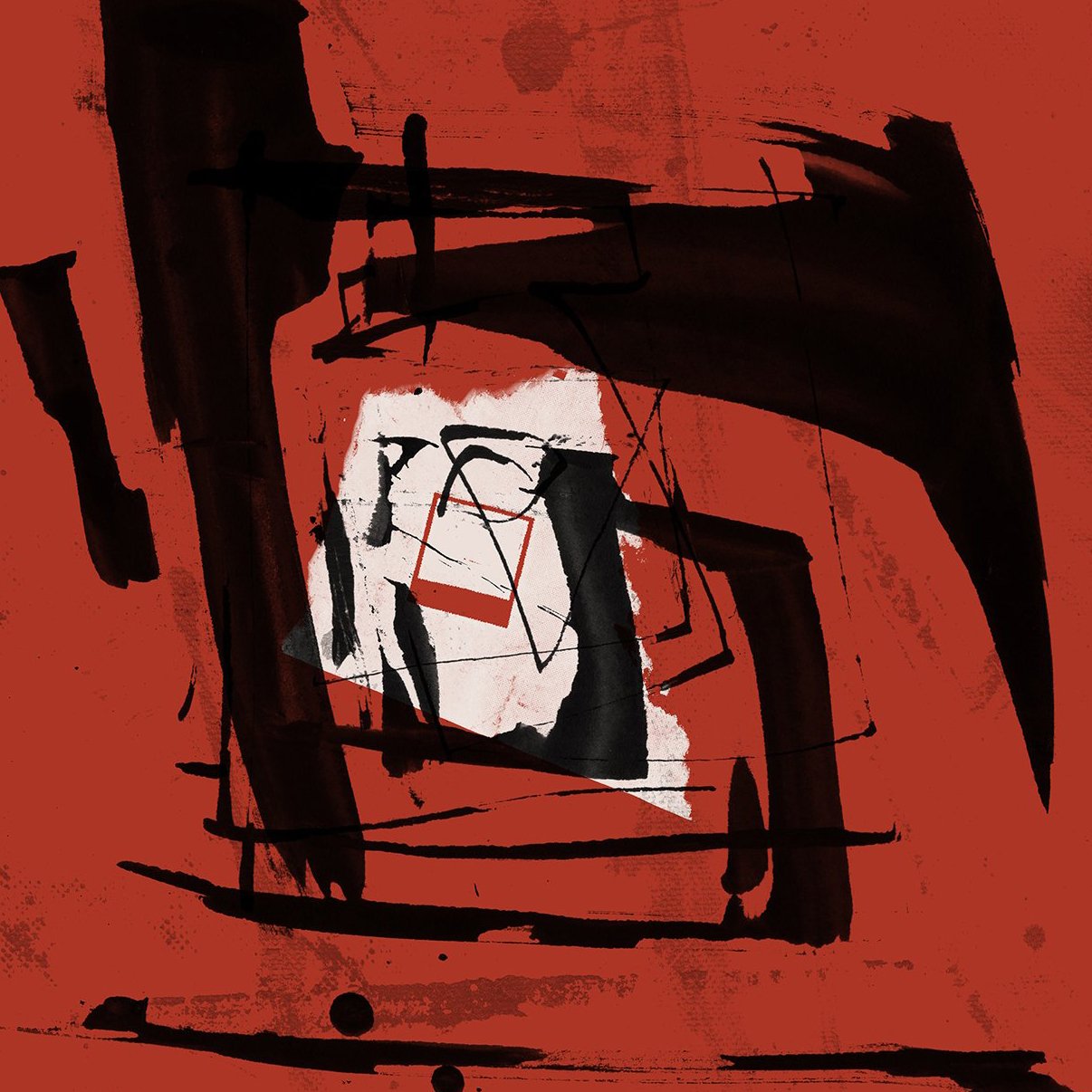
Martin French is an illustrator, designer and educator based in Portland, Oregon. His distinctive style—an interplay of marks, signs, and symbols has been recognized internationally for its dynamic, visual exploration of life and culture.
His work spans a diverse media context including postage stamps, street murals, album covers, picture books, visual essays, & animated commercials. Martin’s work has been commissioned by clients such as Apple, The Atlantic, The Discovery Channel, DreamWorks, ESPN, The Grammy Awards, Jazz at Lincoln Center, The Joffrey Ballet, The New York Times, The NFL, Sony Entertainment, and Stanford University. His images have consistently found a place in the exhibitions and juried shows of leading visual communication organizations such as American Illustration, Communication Arts, Graphis, Society of Illustrators, Spectrum, and 3x3, including gold medals from the Society of Illustrators in Los Angeles and New York. In 2019 and 2023 he received the Patrick Nagel Award for Excellence from The Society of Illustrators of Los Angeles. Martin’s poster designs are central to his body of work and are exhibited worldwide.
Martin’s personal work reflects on issues of mass incarceration, homelessness, the history of jazz and dance, and the intersection of faith and culture.
In 2006 Martin joined the faculty at the Pacific Northwest College of Art where he designed the BFA program in Illustration. PNCA Illustration is now the largest major in the college and ranks as one of the top programs in the country. Martin serves as Department Chair and Professor of Illustration. He teaches classes in professional practice, the intersection of design & illustration, advanced drawing for illustration, and visual thesis development.
Martin is a native of California, and a graduate of Art Center College of Design in Pasadena.
VISION
My professional practice has been focused on taking symbols from daily life and reworking them into images potent enough to strike passing audiences with an experience of aesthetic and intellectual encounter. I've been especially fascinated by how an individual artist's unique vision, when developed and honed, can be at once exclusively personal and yet widely transcendent. This fascination with the expressive and communal paradox inherent in artistic development is what led me away from a career as a creative director to start my own illustration and design practice. These contours and questions still energize my development and practice as a visual communicator.
Thankfully, my disciplinary fascination happens to overlap with what has turned out to be vital professional practice—namely the need for the modern illustrator to find ways of distinguishing their images in a hyper-saturated visual market. That quest isn't, of course, something that ends with a degree or an award. On the contrary, its ongoing, evolving challenges form a large portion of what we refer to as professional practice. How does an illustrator remain savvy and able to read culture? How does an illustrator retain a vision robust enough to start or redirect zeitgeists rather than being conformed to them? My hope is to create images that could have worked in 1909, or work again in 2099—the point being that the appeal depends not on tapping the hype of contemporary culture, but almost the reverse, on stripping away the hype to offer up images conveying something timeless and new.
As a professor, my desirer for student development in and through cultural engagement is the pedagogical extension of my ambition for my own work. I am seeking to deepen the unity between my own professional practice, artistic voice, and cultural involvement. I am energized by seeking greater rigor, expression, risk-taking, and clarity in my work. Naturally, my general teaching philosophy reflects that kind of ethos: I want students to experience my classroom as a laboratory where processes, ideas, and historical/cultural backdrops are live-wires, highly-charged and dynamic elements through which we can better understand, better share, and better tell, our own stories. What's more—and this is core to my overarching goal for myself and my students—I want the classroom to be a place where we learn how to press ever deeper into that powerful personal/communal paradox that a well-developed vision and a highly-sensitive mind can come together and create.
CLIENTS
Selected clients: American Airlines, American Express, Apple, Atlantic Monthly, Bank of America, Barneys New York, Boom! Studios, Boston University, Candlewick Press, Capital Records, Coca-Cola, Consumer Reports, Christianity Today, Columbia Pictures, Discovery Channel, DreamWorks, Dutton Children's Books, ESPN, Fila, Foreign Policy Magazine, The Gap, Gatorade, Grammy Awards, Guinness, Hardy's Winery (Australia), Hershey's, Holland America Cruise Lines, Honda Motorcycles, House of Blues, Island Records, Jazz at Lincoln Center, Joffrey Ballet, John Deere, JVC Jazz Festival, Kate Spade New York, Lucasfilm, Ltd., Major League Baseball, Macy’s, McDonald’s, Microsoft, Multnomah Publishers, Nagano Winter Olympics, National Geographic, NBA, New York Times, NFL, NHL, Nickelodeon, Nike, Nintendo, Nokia, Oracle, Penguin Putnam, Pepsi, Politico Magazine, Rossignol, Salt Lake City Winter Olympics, Scholastic, Simon & Schuster, Smithsonian, Sony Entertainment, Sports Illustrated, Stanford University, St. Martin’s Press, Time/Warner, United States Olympic Committee, United States Postal Service, USA Today, Utne Magazine, Warner Brothers, Wizards of the Coast, and The Village Voice.
PRESS + PUBLICATION + EXHIBITION
American Illustration 43 / Chosen (2)
American Illustration 42 / Selected
American Illustration 30 / Selected
Bolivia International Poster Biennial 2021
Bolivia International Poster Biennial 2019
Cervantino International Festival – Poster Exhibition 2023 / Guanajuato, Mexico
Communication Arts Illustration Annual 64 / Award of Excellence
Communication Arts Illustration Annual 63 / Competition Judge
Communication Arts Illustration Annual 57 / Award of Excellence
Communication Arts Illustration Annual 48 / Award of Excellence
Communication Arts Magazine Feature Article / March-April 2003
Communication Arts Illustration Annual 44 / Award of Excellence (2)
Communication Arts Illustration Annual 41 / Award of Excellence (4)
Communication Arts Illustration Annual 40 / Award of Excellence
Communication Arts Illustration Annual 38 / Award of Excellence
Ecuador International Poster Biennial 2020
Graphis Poster 2024 / Silver Award
Graphis Poster 2024 / Silver Award
Graphis Poster 2023 / Silver Award
Graphis Poster 2023 / Silver Award
Graphis Poster 2023 / Silver Award
Graphis Poster 2022 / Silver Award
Graphis Poster 2022 / Silver Award
Graphis Poster 2022 / Honorable Mention
Graphis Poster 2022 / Honorable Mention
Graphis Poster 2021 / Silver Award
Graphis Poster 2021 / Silver Award
Graphis Poster 2021 / Silver Award
Graphis Poster 2021 / Silver Award
Graphis Poster 2021 / Honorable Mention
Graphis Poster 2020 / Silver Award
Graphis Poster 2020 / Honorable Mention
Graphis Poster 2020 / Honorable Mention
Graphis Poster 2019 / Silver Award
Graphis Poster 2019 / Merit
Graphis Poster 2017 / Silver Award
Graphis Poster 2017 / Merit
Graphis Poster 2017 / Merit
Graphis Social + Political Protest Posters / Merit
Icons & Images: 50 Years of Illustration / Society of Illustrators 2008
Idea Design Magazine (China) Feature Article / February 2008
Illustrator Illuminated Feature Article / Adobe Press 2003
Luerzer's Archive 200 Best Illustrators Worldwide 2018
Luerzer's Archive 200 Best Illustrators Worldwide 2016
Luerzer's Archive 200 Best Illustrators Worldwide 2014
Mexico International Poster Biennial 2022
Mexico International Poster Biennial 2020
Mexico International Poster Biennial 2018
Society of Illustrators Los Angeles Annual Exhibition 2023 / Institutional Gold Award
Society of Illustrators Los Angeles Annual Exhibition 2023 / Merit Award
Society of Illustrators Los Angeles Annual Exhibition 2023 / Call for Entries Poster
Society of Illustrators Los Angeles Annual Exhibition 2022 / Patrick Nagel Award for Excellence
Society of Illustrators Los Angeles Annual Exhibition 2022 / Merit Award (3)
Society of Illustrators Los Angeles Annual Exhibition 2021 / Institutional Bronze Award
Society of Illustrators Los Angeles Annual Exhibition 2021 / Merit Award
Society of Illustrators Los Angeles Annual Exhibition 2020 / Advertising Honorable Mention
Society of Illustrators Los Angeles Annual Exhibition 2020 / Merit Award (3)
Society of Illustrators Los Angeles Annual Exhibition 2019 / Institutional Gold Award
Society of Illustrators Los Angeles Annual Exhibition 2019 / Merit Award (2)
Society of Illustrators Los Angeles Annual Exhibition 2018 / Patrick Nagel Award for Excellence
Society of Illustrators Los Angeles Annual Exhibition 2018 / Merit Award (3)
Society of Illustrators Los Angeles Annual Exhibition 2017 / Advertising Silver Award
Society of Illustrators Los Angeles Annual Exhibition 2017 / Institutional Bronze Award
Society of Illustrators Los Angeles Annual Exhibition 2017 / Un-Published Bronze Award
Society of Illustrators Los Angeles Annual Exhibition 2017 / Merit Award (2)
Society of Illustrators Los Angeles Annual Exhibition 2015 / Institutional Silver Award
Society of Illustrators Los Angeles Annual Exhibition 2015 / Institutional Bronze Award
Society of Illustrators Los Angeles Annual Exhibition 2015 / Advertising Bronze Award
Society of Illustrators Los Angeles Annual Exhibition 2015 / Merit Award
Society of Illustrators Los Angeles Annual Exhibition 2013 / Merit Award
Society of Illustrators Los Angeles Annual Exhibition 2012 / Merit Award (2)
Society of Illustrators Los Angeles Annual Exhibition 2012 / Institutional Honorable Mention (2)
Society of Illustrators Los Angeles Annual Exhibition 2011 / Merit Award
Society of Illustrators Los Angeles Annual Exhibition 2010 / Advertising Gold Award
Society of Illustrators Los Angeles Annual Exhibition 2010 / Advertising Honorable Mention
Society of Illustrators Los Angeles Annual Exhibition 2008 / Merit Award
Society of Illustrators Los Angeles Annual Exhibition 1998 / Merit Award (3)
Society of Illustrators Los Angeles Annual Exhibition 1997 / Call for Entries Poster
Society of Illustrators Los Angeles Annual Exhibition 1997 / Merit Award (3)
Society of Illustrators New York Annual Exhibition 2023 / Merit Award
Society of Illustrators New York Annual Exhibition 2007 / Merit Award (4)
Society of Illustrators New York Annual Exhibition 2002 / Merit Award
Society of Illustrators New York Annual Exhibition 2000 / Merit Award (2)
Society of Illustrators New York Annual Exhibition 1999 / Institutional Gold Medal
Society of Illustrators New York Annual Exhibition 1999 / Merit Award (6)
Society of Illustrators New York Annual Exhibition 1998 / Merit Award (3)
Spectrum 13
Peru International Poster Conference 2022 / Best Artistic Poster Award
Peru International Poster Conference 2022 / Finalist for Best Artistic Poster and Best Advertising Poster
Peru International Poster Conference 2021 / Best Artistic Poster Award
Revista Ilustrar (Brazil) / Feature Article / December 2007
Step by Step Magazine Illustration Annual 1 / Feature Article / May-June 2000
United States International Poster Biennale 2023 / Award of Merit (2)
Warsaw International Poster Biennial 2021
Woodstock 50: A Piece Of My Heart Poster Exhibition / Museo Franz Mayer, Mexico City, Mexico
3x3 Magazine Illustration Annual 2023 / Merit Award
3x3 Magazine Illustration Annual 2017 / Merit Award